Press kit
Trench Engr. by Turkraft Games: the facts, the pictures, the logos and a short film. Free to use when you write about the game.
Everything, 10.8 MBDownload the kit
Fact sheet
- Developer
- Turkraft Games
- Publisher
- Turkraft Games
- Genre
- Real-time strategy
- Setting
- The Western Front, 1914 to 1918
- Platforms
- Windows PC and Android
- Where to buy
- itch.io (Windows). Steam and Google Play: coming soon
- Languages
- English
- Players
- Single player, offline; multiplayer online, 2 to 4 players
- Press contact
- info@turkraft.com
- Discord
- discord.gg/KfVkwpyaHF
- YouTube
- @turkraftgames
- Patreon
- patreon.com/turkraftgames
About the game
Strategy in the trenches of the First World War. The General phones with ideas.
The General’s compliments. He’d like the line moved forward four hundred yards by tea. He appreciates it’s raining. He’s indoors.
Trench Engr. is a real-time strategy game about the trenches of the First World War, and you are the trench engineer. Every soldier on the field is simulated, and the largest battles have thousands.
The tools
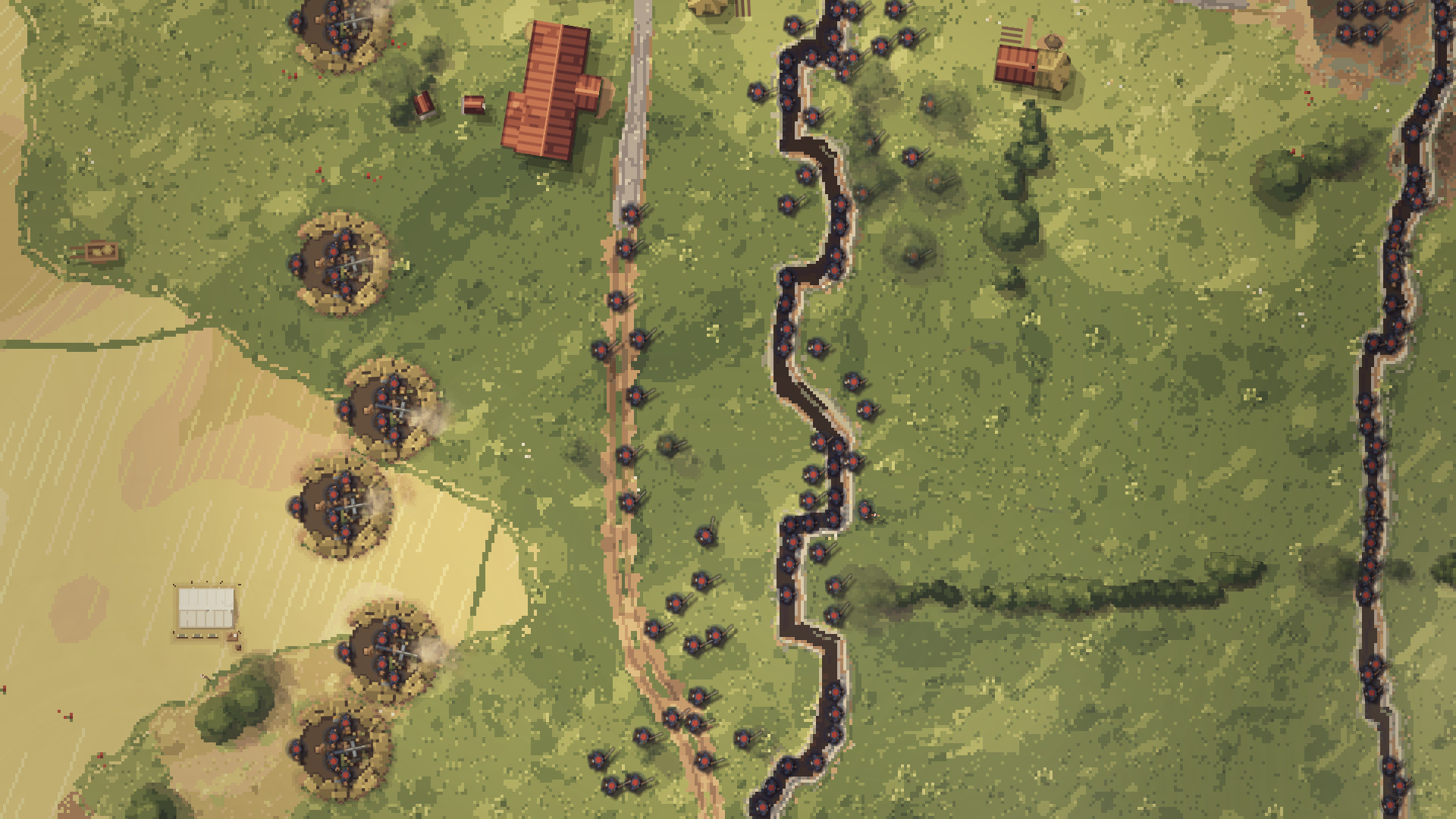
- Dig fire, support and communication trenches, then add dugouts and machine-gun nests and keep it all repaired.
- Wire the front. Work parties lay it, and they work faster in the dark.
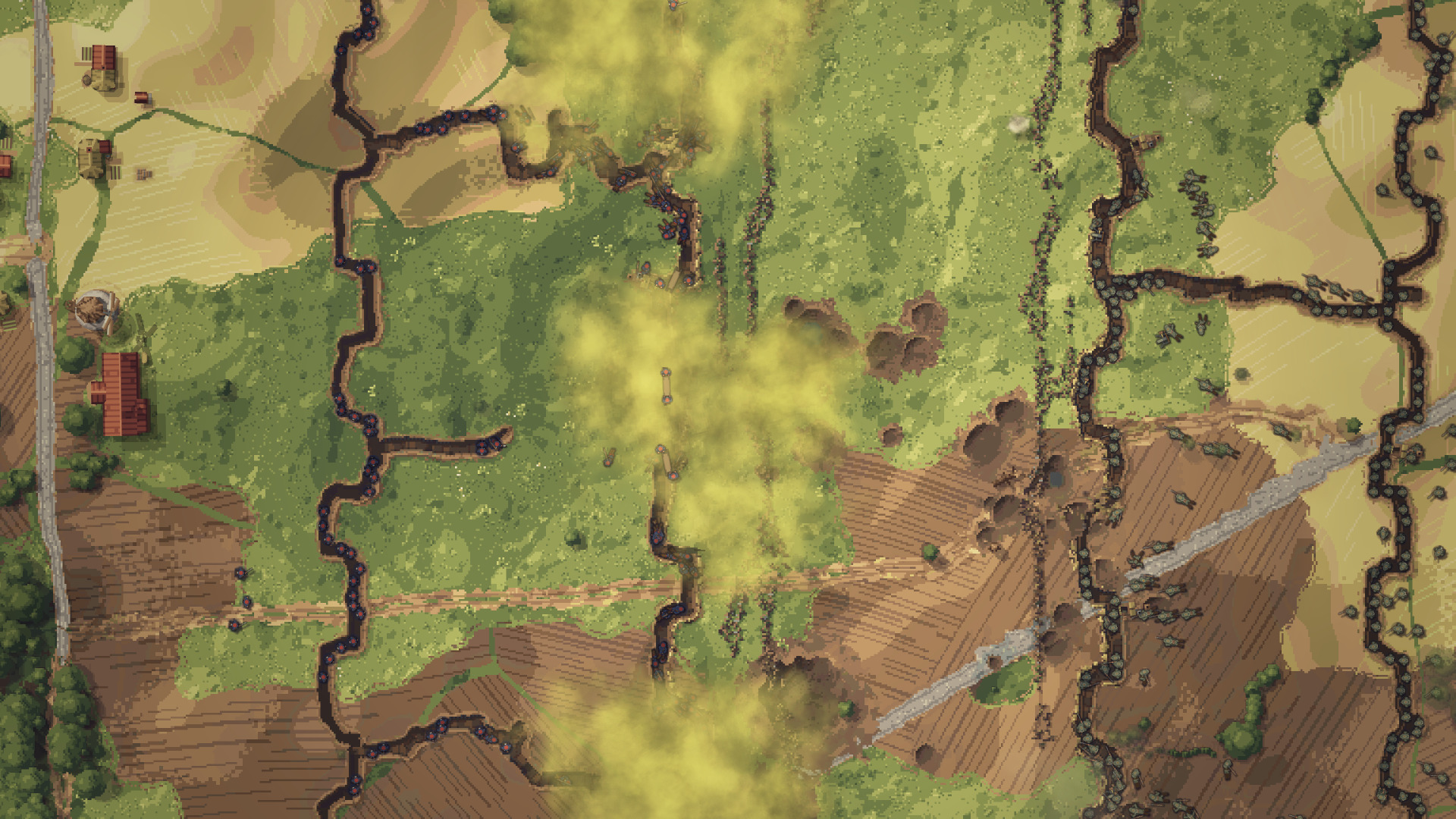
- Request a barrage on a point, along a line or creeping ahead of an attack, with high explosive, shrapnel, smoke and, from 1915, gas.
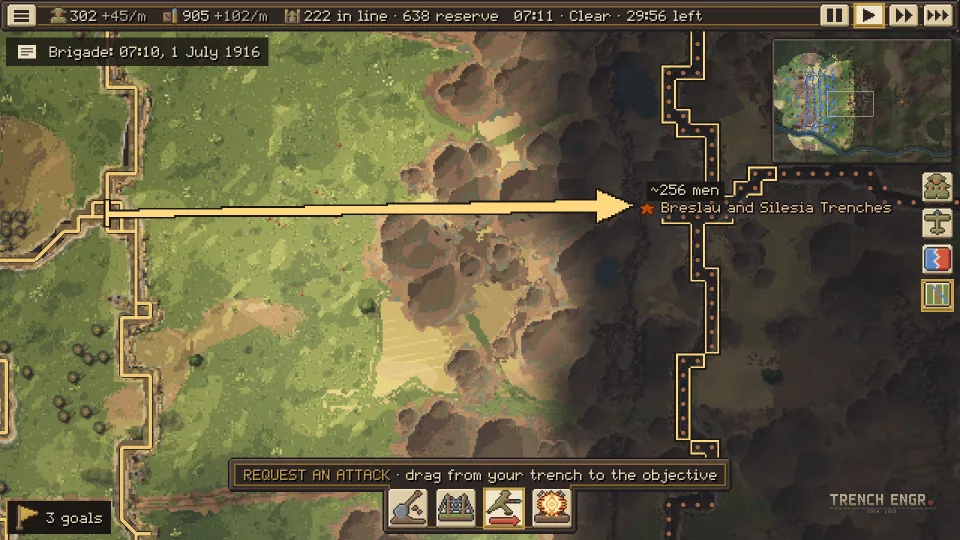
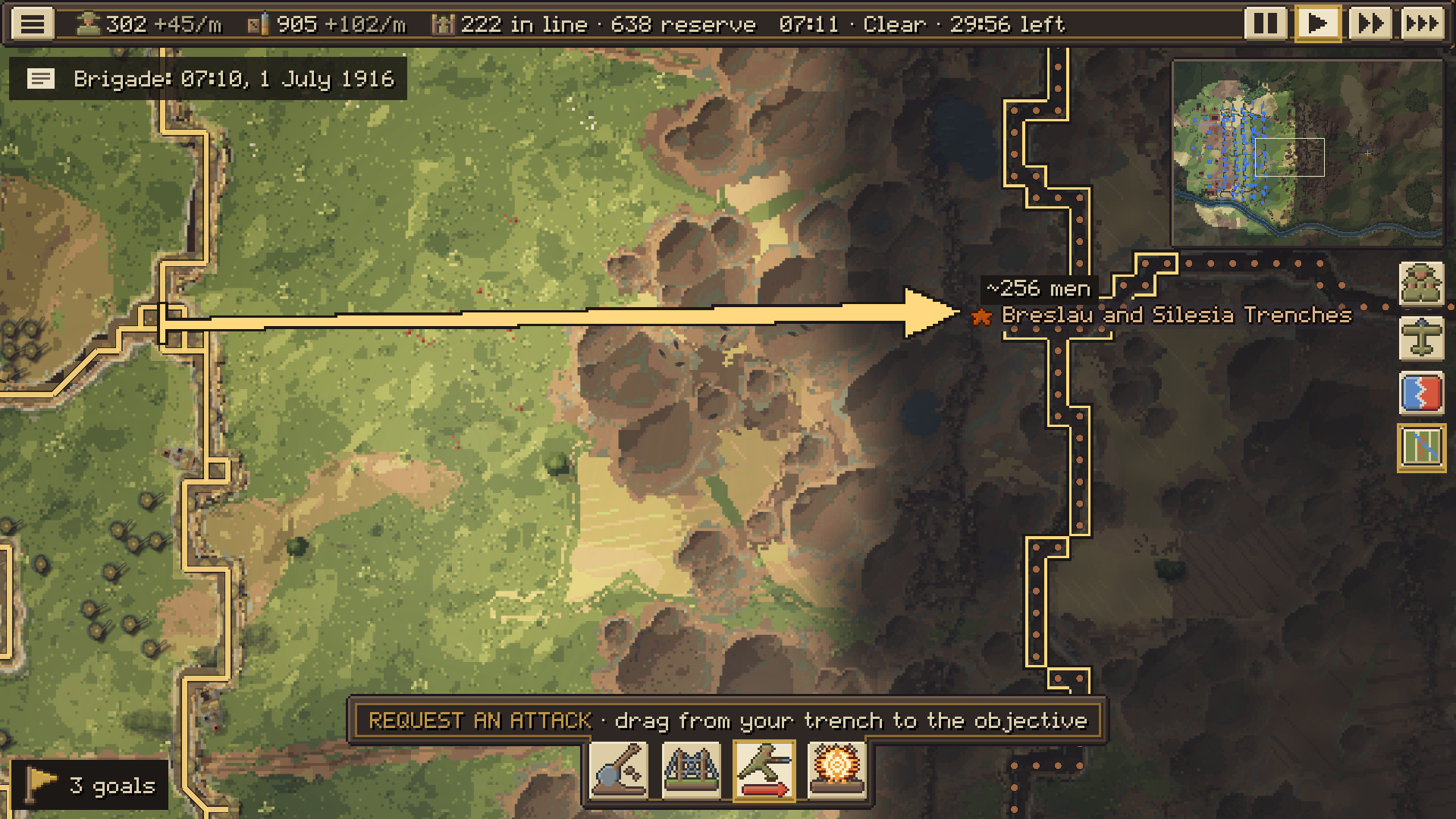
- Request an attack by dragging an arrow to the enemy line. Set zero hour and, from 1916, a creeping barrage, then send the waves over at the whistle.
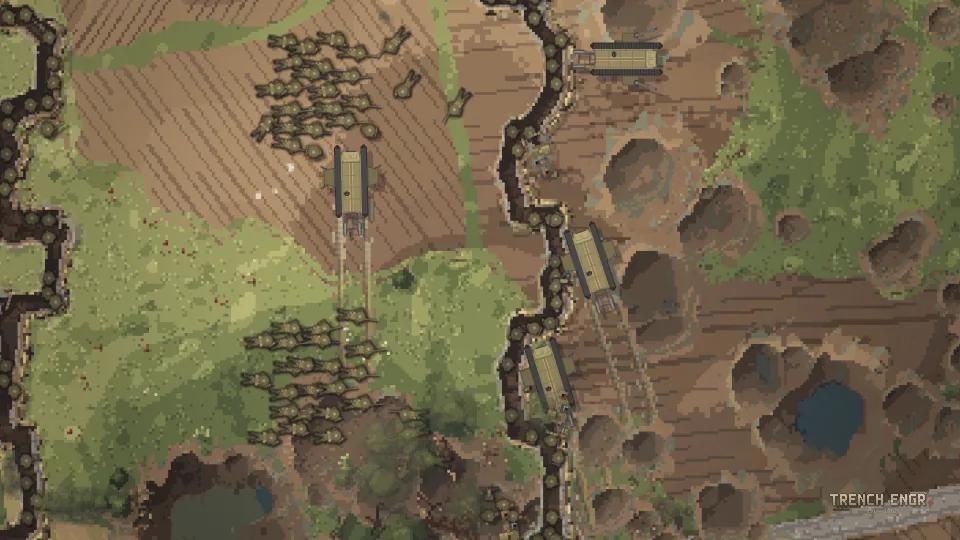
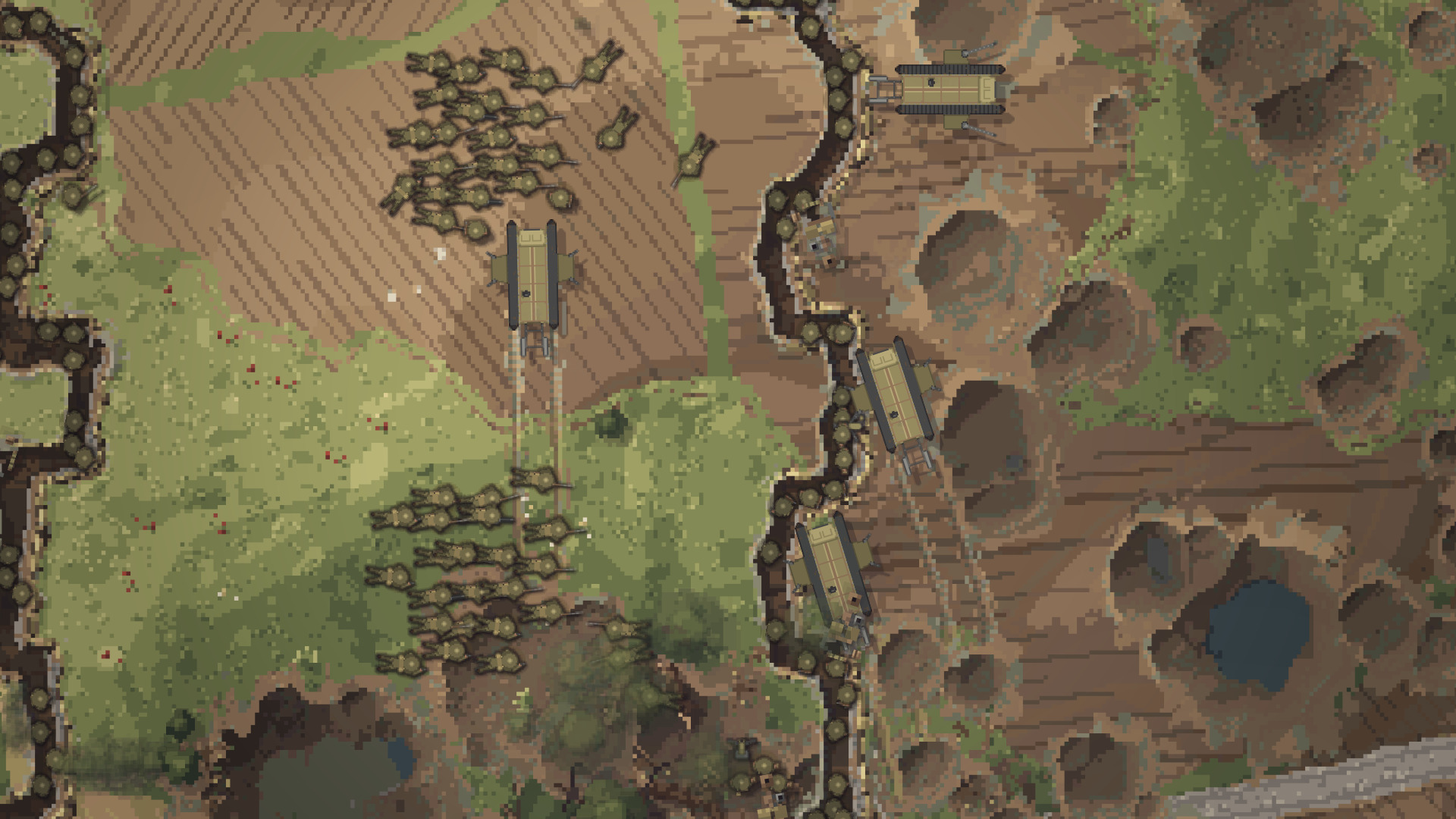
- Requisition companies, machine guns, trench mortars, guns and tanks when the line needs them, as the year allows. The sappers build aid posts, observation posts and, from 1917, concrete pillboxes behind the line.
- Call in reconnaissance flights and observation balloons to find the enemy’s guns. Fighter patrols come from 1916, bombing raids from 1917.
Headquarters is on the line
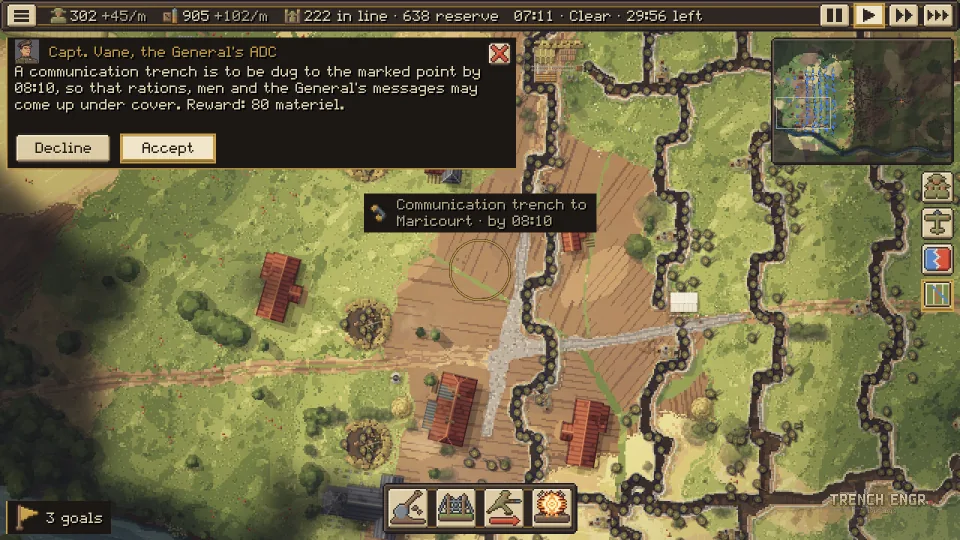
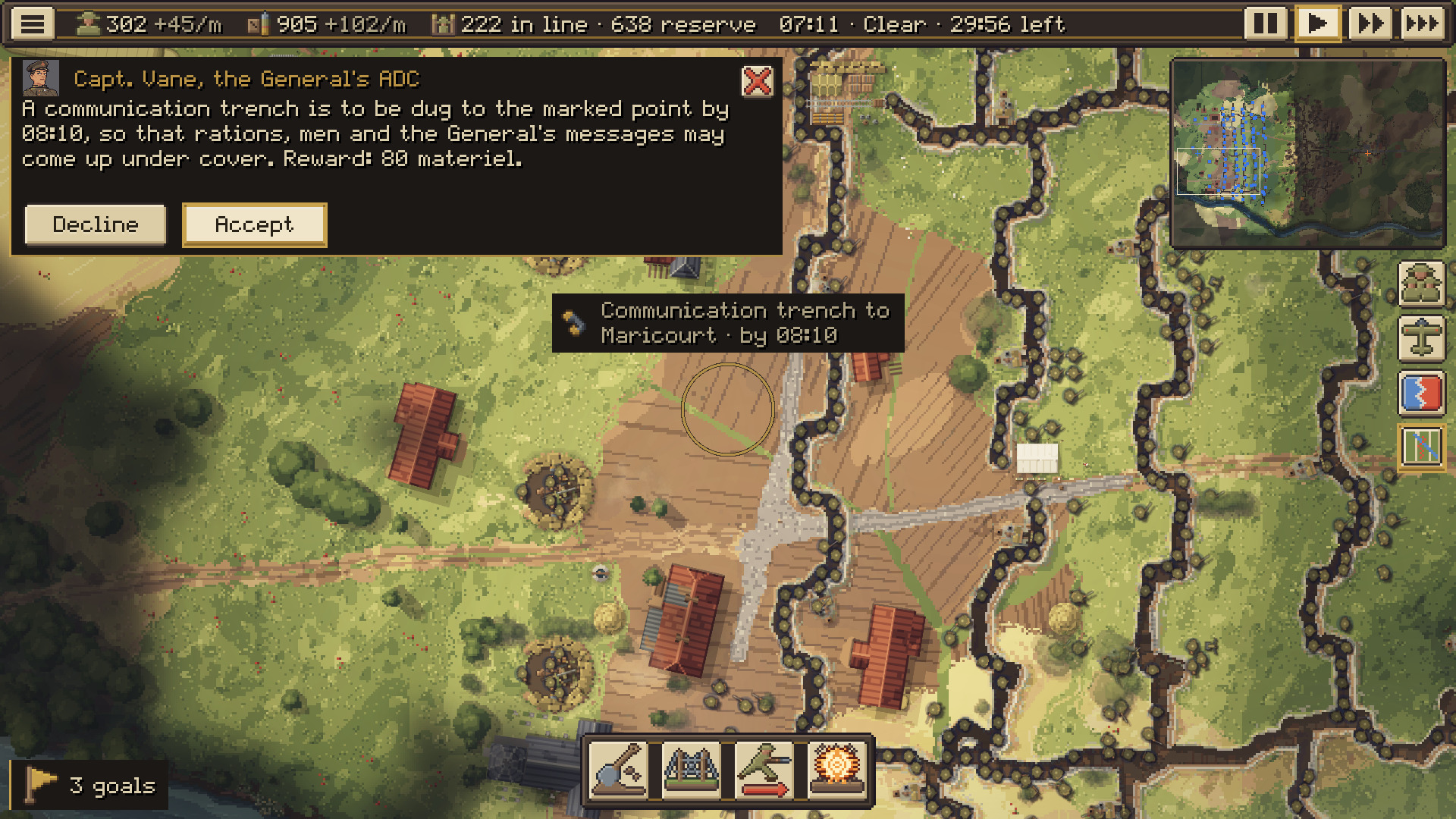
The field telephone rings with requests: a communication trench back to Carnoy by 11:30, a trench repaired before the General’s inspection, ten men to carry the Colonel’s piano. Take a job and Headquarters pays in materiel, men or a commendation, and thinks better of you. Turn it down and your men stay where you need them. Every caller speaks a gibberish of his own, from the ADC and the General to Q Branch, the signaller, the Sergeant and the gunner.
Report to Headquarters
Every battle ends with your report, typed and stamped: the works, the line, the requests met and any commendations (“Mentioned in dispatches for a trench of exceptional straightness”). The casualties are listed plainly.
Three campaigns, 28 battles
The British campaign runs from Mons in 1914 to Amiens in 1918, by way of Second Ypres, a night raid, the Somme, Flers-Courcelette, Messines, Passchendaele, Cambrai and the German spring offensive. The French one goes from the Marne in 1914 back to the Marne in 1918, through the Yser, Champagne, Verdun and the Chemin des Dames. The German one starts at Rossignol in the Ardennes in 1914 and ends before the Siegfried-Stellung in 1918. Each army has its own Headquarters, voices and paperwork.
In skirmish you can play any of the three armies on seven kinds of generated battlefield, against an enemy commander who sees only what his own side sees: a standard battle where he plays by your rules, an Assault to break the enemy’s line, or a Last stand against wave after wave. Every week brings a new Operation, the same for every player.
Play together
Two to four engineers can share a battle online, each with their own army: one against one, two against two, or two of you side by side against the computer. Two friends can also attack together in an Assault, or hold the line together in a Last stand. Share the room’s code with your friends, or open the battle to anyone. Nobody types: the game gives you a callsign, and allies signal each other on the map.
The field
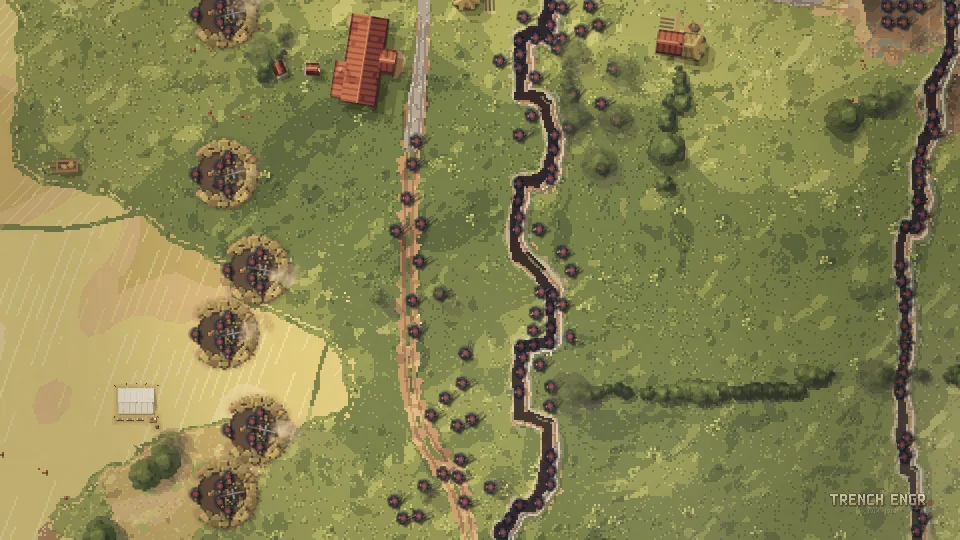
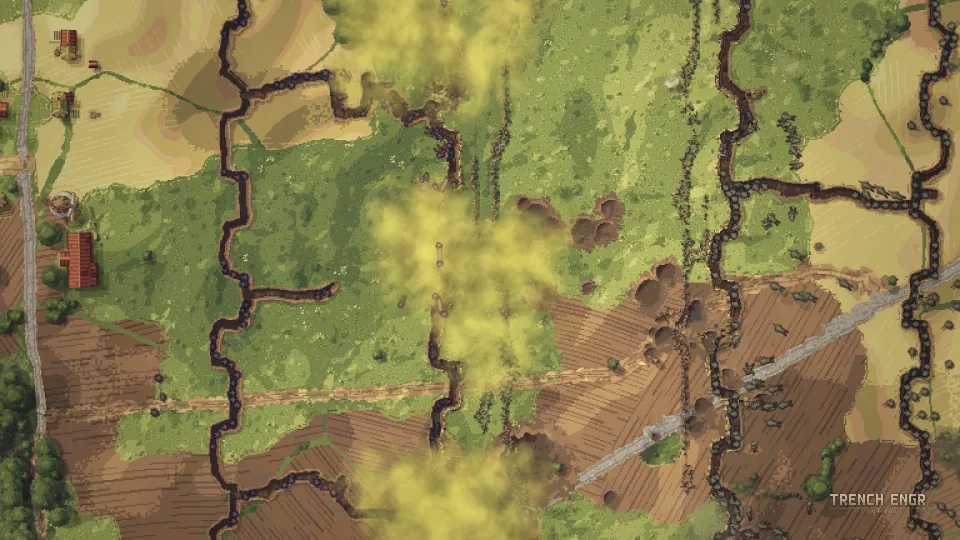
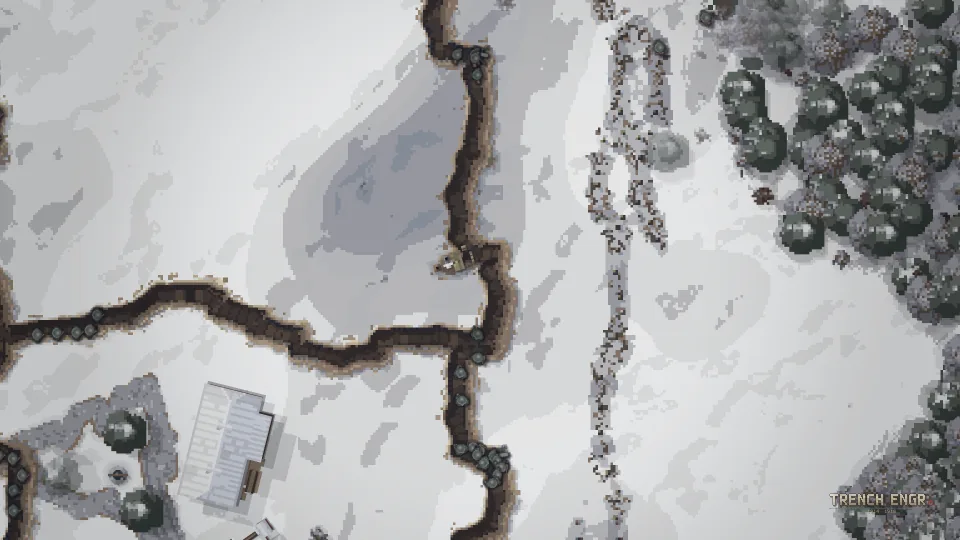
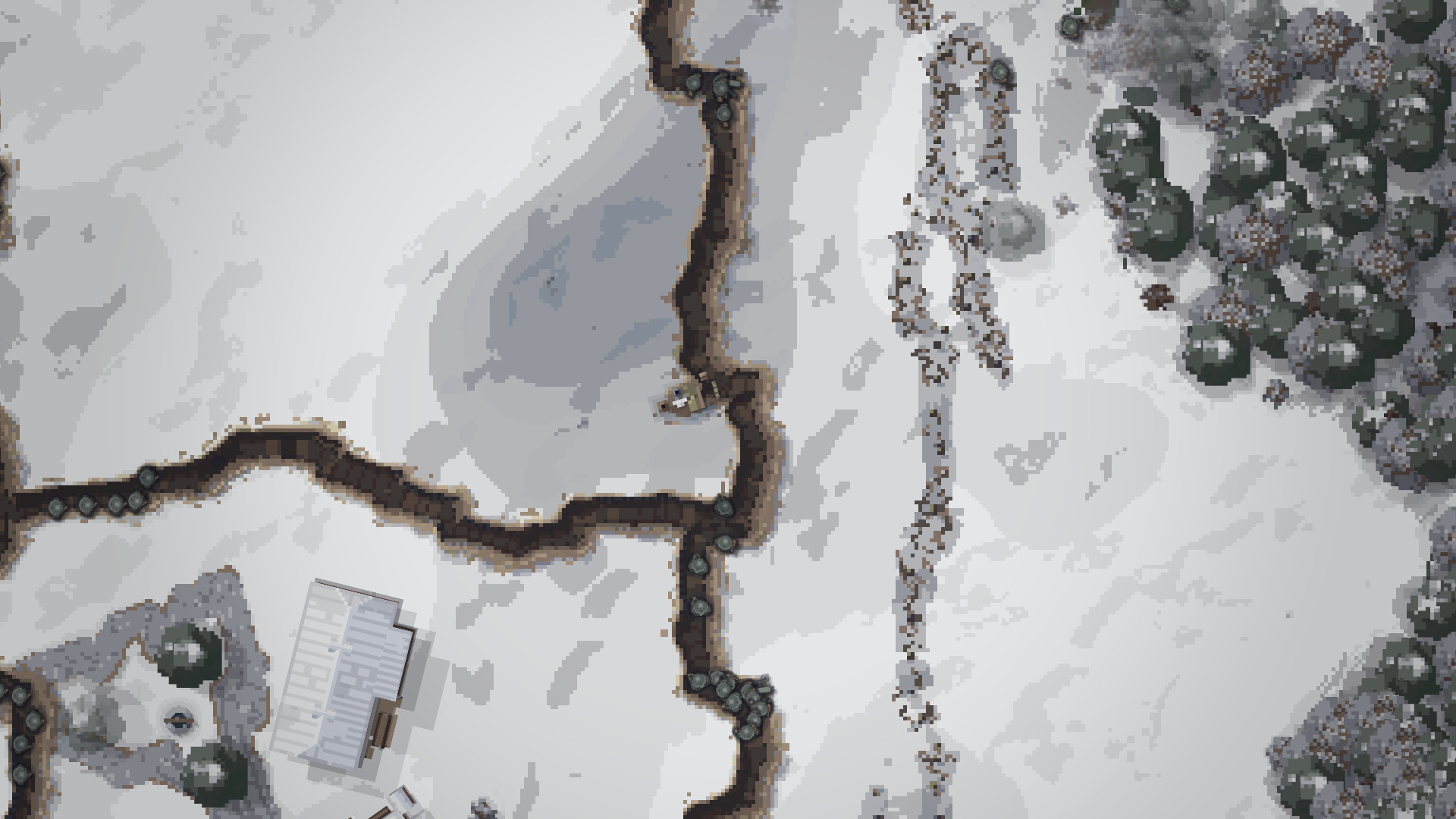
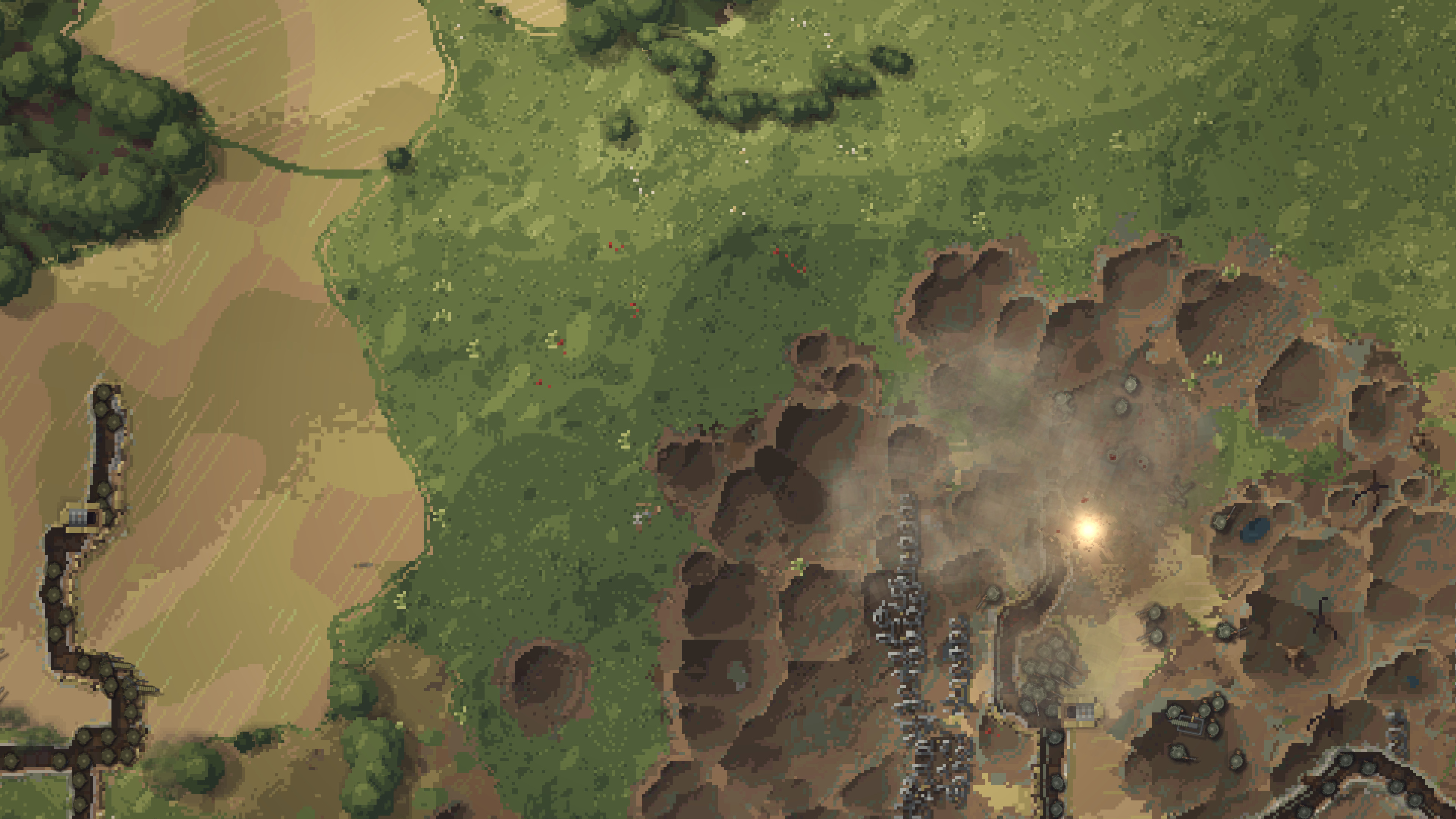
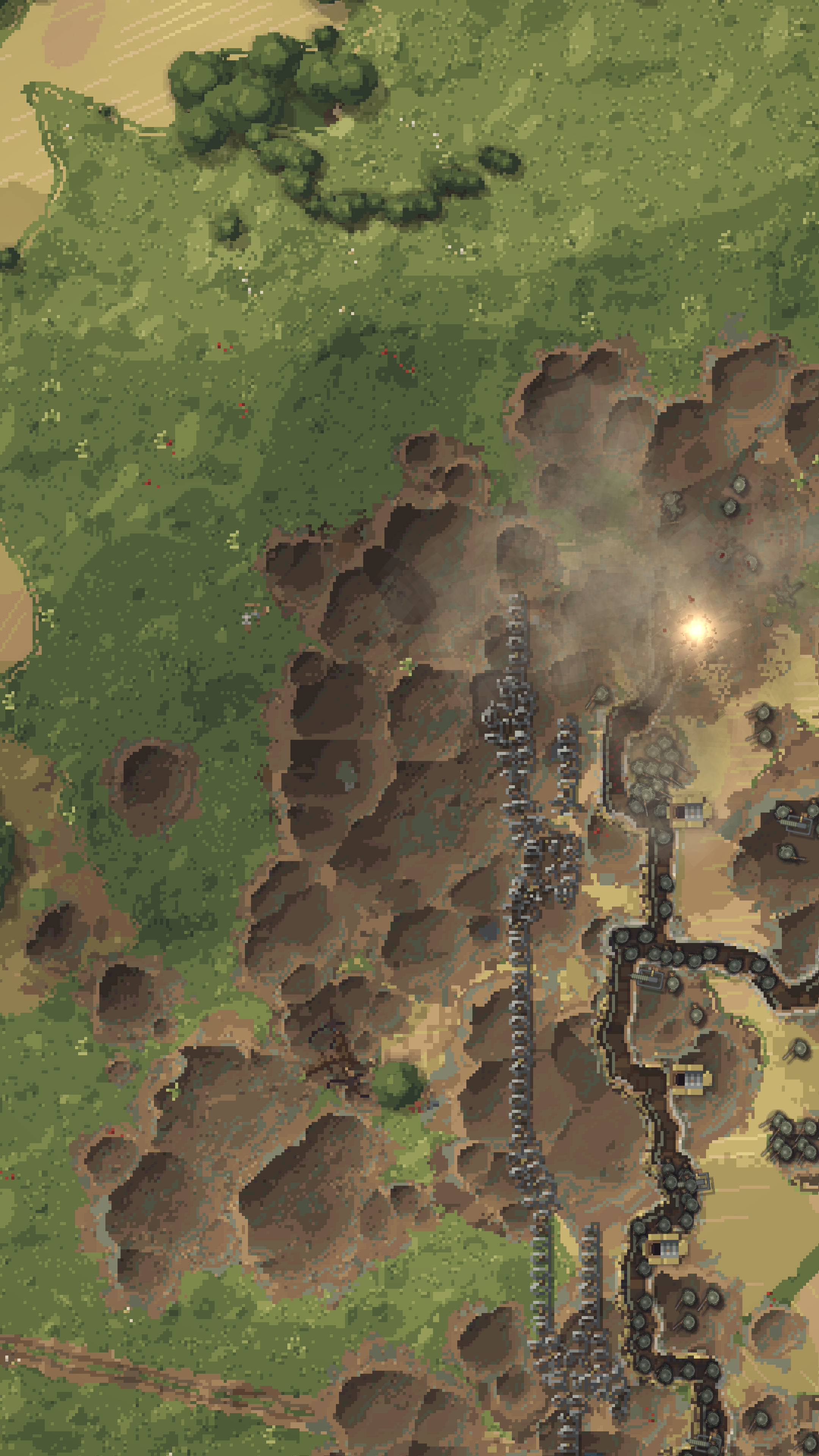
Soft pixel art seen from straight above, as an observer in a balloon would see it. Mud, rain, fog, snow, gas and night. The shell holes stay where they were blown, and so do the fallen.
Also
- Pause at any time in a battle of your own. Every order can be given while paused.
- Quit a battle of your own midway and carry on later exactly where you stopped, unless an update in between changed how battles play.
- Playing on your own works offline and sends nothing anywhere.
Screenshots
Full size, without the website’s mark.
-
-
-
-
-
-
Art and logos
Film

Contact
Questions, interviews or anything else: write to us.